
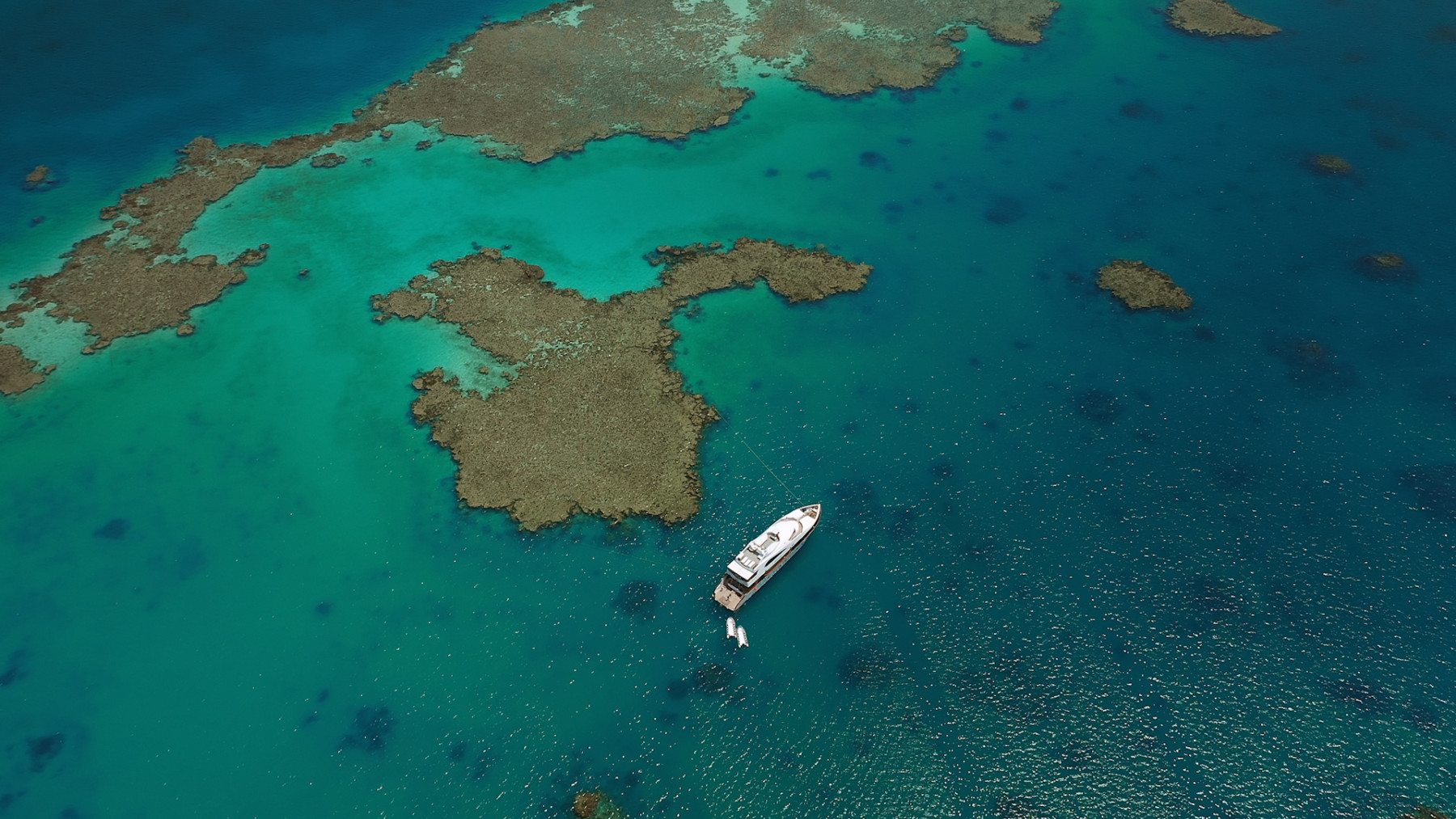


Looking for discounts, travelling less and travelling shorter distances - the face of the travel industry in 2010.
pangaeanetwork has published the findings of its recent travel market
research. A representative panel of 150 international travel
professionals was asked for views of and predictions for the travel
industry in today’s economic climate. The findings identify market
trends, statistics, views and predictions, with a specific focus on the
Luxury Travel Market.
General Industry Trends
Most travel professionals believe that the industry has declined over
the past 12 months (63%), although 44% believe the decline to be
slight. Conversely, 26% believe it has improved. Despite this however,
the overall picture is a negative one.
The most notable impact of the recession on the travel industry is
reported to be that clients are travelling less (32%). Clients who
continue to travel are cutting back on spending by taking shorter
trips, spending less per trip or by travelling shorter distances (56%).
Just 5% have not noticed any impact from the recession.
Clients have become more cautious with their spending and there is a
clear trend of booking later and spending less, hoping to take
advantage of last-minute deals whenever possible. Almost 50% of
respondents reported that their clients expect a 10-15% discount, with
23% reporting expectation of an even greater discount.
Those still spending on travel are saving money by taking shorter
breaks and staying closer to home. Only 17% reported that clients are
spending 2 weeks or longer on holiday, with 10 days (33%) being the
most popular choice. 78 % of respondents have noticed a change in
booking patterns since the recession took hold. Almost half of clients
are booking between 2 weeks and a month before travel, with a quarter
booking less than 2 weeks before travel. A shorter break of 5 days is
the most common period for 20% of respondents.
Luxury Travel Market
Luxury travel has not escaped the effects of the recession. Many are
taking fewer holidays than before, and travelling to less exotic
destinations and although some have reduced spend on travel this is not
an overall trend. Indeed, price was ranked only 8 out of 12 of
important considerations for luxury travellers. Quality of experience
remains key to the booking decision and is something that luxury
travellers are unwilling to compromise on. Considerations such as
quality of accommodation, privacy and reputation are noted as the top
three factors influencing choice of holiday in the luxury market.
Results indicate that quality of experience (accommodation, gastronomy)
is more important than facilities (sports & activities, family
facilities).
While they may not necessarily be consistently looking for lower
prices, luxury travelers (in line with most other travelers) are
looking for added value – they are more demanding, negotiate more on
price and are always looking for deals.
Will there be permanent changes to the luxury market due to the
recession? 28% believe that luxury travel will revert once the
recession ends. However, over half believe that this segment will
continue to book later or negotiate harder, expecting more ‘value’ for
their money and thus from their holiday. 1 in 5 respondents feel that
luxury travellers will broaden their horizons by trying a wider range
of experiences, even if they’re not as luxurious as usual.
Destination and style of holiday
Respondents were asked to comment on emerging luxury resorts,
destinations and cities. South Africa is the most mentioned
destination; possibly influenced by the FIFA World Cup taking place
there this year. In the ranking Maldives, India, Brazil, Oman and
Morocco follow.
Interestingly, while most people commented solely on destinations, Six Senses Resorts are also mentioned.
The most ‘on trend` style of luxury holiday by far is the experiential
holiday with 6 in 10 respondents identifying it. ‘Fly and flop’ is
still popular with 3 in 10 respondents. ‘Learn a skill’ is much less
popular; just 1 in 10 respondents believe it to be ‘on trend’.
Responsible Tourism is an increasingly talked about issue in the travel
industry today. However, we are not at the stage yet that travelers
will allow responsible tourism to be the deciding factor in the
purchase of their holiday. Indeed, 61% believe that responsible tourism
is a consideration but that it is price that influences the final
purchase. In line with this 17% feel that responsible tourism issues
were gaining importance but that the recession has put a stop to it.
While only 7% feel that responsible tourism is a big consideration and
will influence the purchase decision, for the luxury travel sector this
figure increased to 18 %. However, 21% of respondents believe luxury
travelers do not consider these issues when booking.
Price and value of luxury holidays
33% of respondents feel that luxury travellers are spending less on
their main holiday, whilst 40% feel that there is no change in their
spend. Almost a quarter believes that there is no overall trend.
Whilst nearly 3 in 5 respondents believe the recession to have
influenced luxury clients’ travel; only a quarter believe that it has
influenced the level of accommodation they’re willing to stay at. This
would indicate that luxury travellers are unwilling to compromise on
the part of the holiday where comfort could be most important.
Predictions for the travel industry for 2010
Predictions for 2010 do not show a positive picture, with 55% expecting
that the industry will not recover until 2011 or beyond. Only 4% expect
to see an improvement in the first quarter of 2010, with 15% looking
for recovery in the third quarter.
With travellers being more demanding, negotiating more on price and
looking for added value, businesses need to maintain market share more
than ever. Respondents cited various activities in order to maintain
this market share including offering customers deals and upgrades so
that perception of value increases and leveraging differentiation.
Marketing is high on agendas with businesses looking to increase online
presence and direct marketing and better their customer service levels.
There are mixed expectations for the year ahead. Largely travel
bookings are anticipated to increase, however, clients are probably
going to continue to book later and be more price-sensitive. Holidays
are likely to be shorter and the exchange rate may impact on
destination choice.
To receive a full copy of the report please email: ldavidson@bgb.co.uk
Around 150 international participants from Sweden, United Kingdom,
Germany, Italy, France, Spain, India, Mauritius, Maldives, Thailand,
Bermudas, South Africa, Canada and the United States of America have
completed the survey. A broad range of sectors are represented from
hotel operators, tour operators, travel agents and transport companies.
Their business size varies from smaller to larger companies: 44% of the
respondent’s businesses employ less than 30 staff and 43% more than 100
staff members. The latter largely made up of airline, hotel and tour
operator companies. The major part of the respondent group consisted of
persons between 26 and 55 years of age (82%).